Oxygen, temperature & airflow
The proposed SCADA monitoring system records pod conditions to help operators maintain an aerobic process and identify deviations.

The aerobic pod system
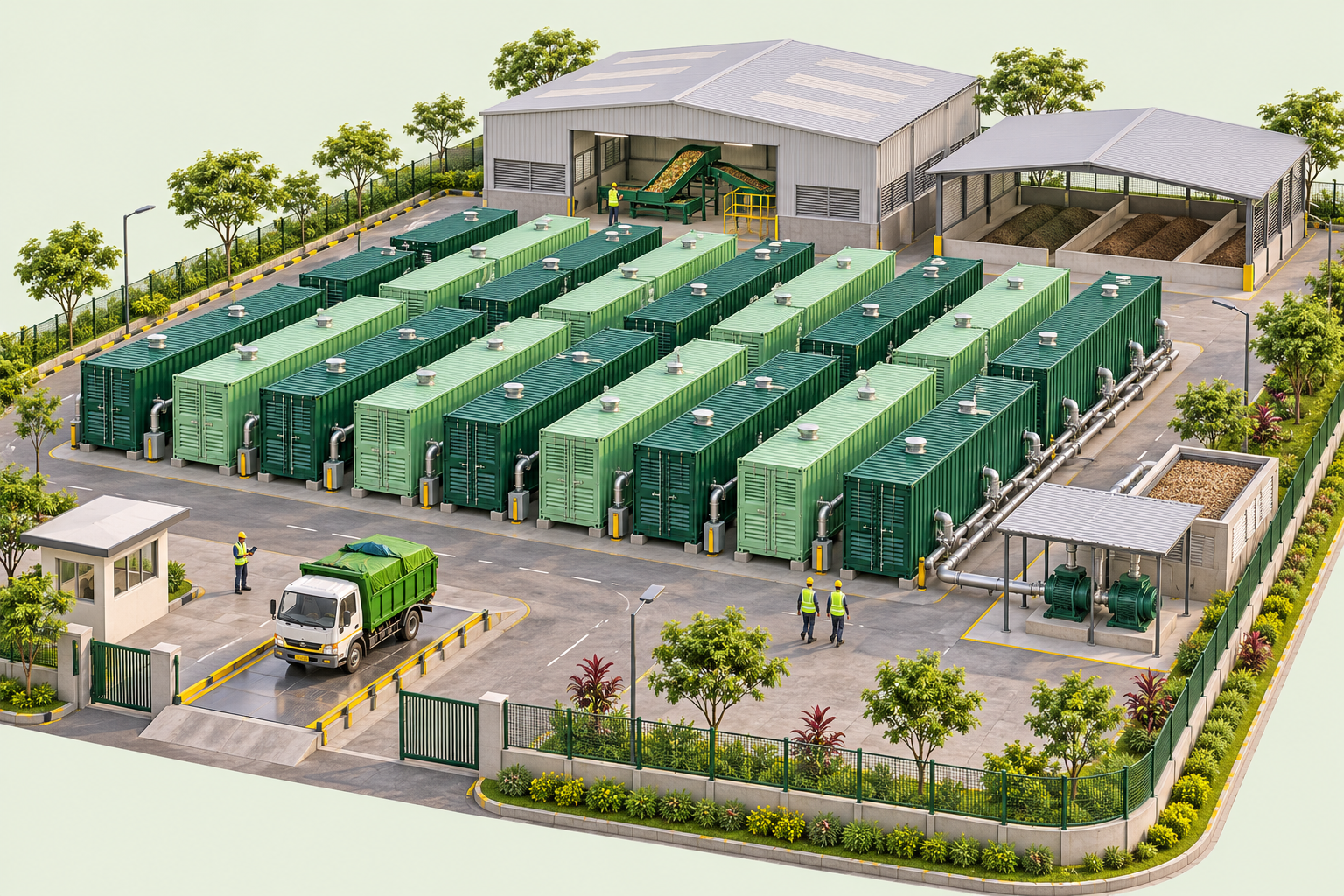
A proposed 100 TPD facility pairs material recovery with containerised aerobic pods to treat the organic fraction of fresh municipal waste.
The pod at the heart of the process
Organic waste produces methane when it breaks down without enough oxygen. The pod system is designed to maintain aerobic conditions through continuous forced aeration, supported by monitoring and operational control.
The treatment modules use 40-foot containerised pods. Exhaust air is directed through a biofilter to control odours, and process water is contained and managed with a zero untreated leachate-discharge target.
The current 100 TPD facility concept allocates approximately 55 TPD of organics to the pods after sorting. The remaining material follows appropriate recovery or disposal routes.
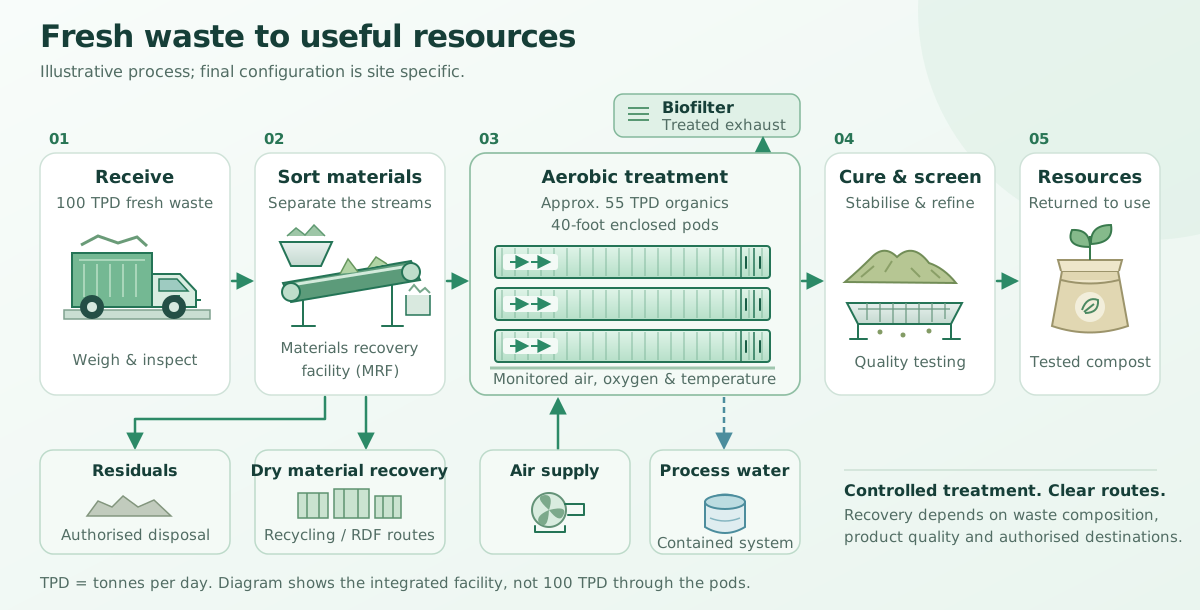
The process, visualised
An integrated facility
Fresh waste is weighed and inspected. Source segregation is retained, with sanitary and special-care waste kept on appropriate authorised routes.
A materials recovery facility separates recyclables, suitable combustible material and the organic fraction.
Organics enter enclosed containerised pods. Controlled aeration and monitored conditions support aerobic stabilisation; exhaust air passes through a biofilter.
Stabilised organic material is cured and screened. Compost quality is tested before appropriate use.
Recoverable materials are routed to appropriate users. Only residual material requiring disposal goes to authorised facilities.
A controlled environment
The proposed SCADA monitoring system records pod conditions to help operators maintain an aerobic process and identify deviations.
The concept allows approximately 21 days of aerobic pod treatment followed by around 14 days of curing. Actual operating cycles depend on feedstock and validation.
Waste acceptance records, material tracking and product testing support accountable operation and suitable end uses for recovered materials.
Flexible deployment
The 100 TPD configuration provides a starting point for a site assessment. Additional pods and facilities can support larger waste volumes, subject to land, utilities, buffer zones, logistics and statutory approvals.
The proposed Indian configuration draws on the technology partner's experience with full-scale aerobic waste treatment. The containerised fresh-waste design is a new application; its operating performance will be validated during commissioning and operation.
Your questions
No. It is the capacity of the integrated facility. The current concept sends approximately 55 TPD of sorted organic material to the pods; other fractions follow recovery or authorised disposal routes.
It is the design target for the integrated facility: recover or process over 90% of the incoming waste stream rather than sending it to landfill. It is subject to waste composition, segregation, product quality and suitable recovery routes.
Enclosure and biofiltered air target foul odours, and maintaining aerobic conditions is designed to prevent methane formation in the treatment stage. Site-wide odour management, fire prevention and safe operating procedures remain essential.
A site must be assessed for access, land use, buffer zones, utilities, environmental conditions and the applicable approvals. Modularity gives flexibility within those requirements.
Start a conversation
Tell us about your waste stream, location and daily volumes. We can discuss the appropriate processing configuration and the next steps for a site assessment.